 Get Started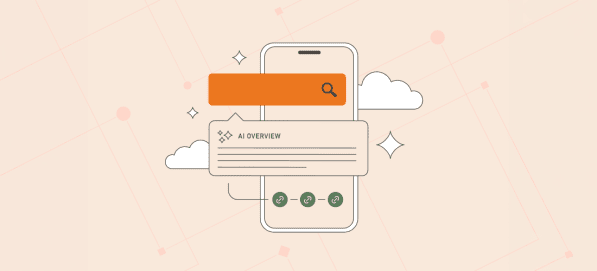

Key Takeaways
AI visibility measures how frequently and accurately a brand is referenced within synthesized AI answers, representing the next evolution of search engine optimization. As users increasingly rely on direct answers, securing inclusion in these models is critical for brand discovery.
Changes in user behavior are compressing the traditional research funnel, with nearly 60% of searches in the United States ending without a click in 2024. Analysts predict traditional search engine volume will drop an additional 25% by 2026.
The integration of generative AI into search interfaces reduces organic click-through rates for position-one content by up to 58%. Brands operating in high-consideration categories must adapt their digital architecture to maintain pipeline influence and perceived market leadership.
Leaders should evaluate their current digital infrastructure to ensure it supports the structured data, technical performance, and topical authority required by AI systems. Adapting content architectures for bots ensures your brand remains a citable resource on the agentic web.
For years, the formula for online discovery was clear: create impactful content, optimize it for keywords, build backlinks, and earn the click. Now, artificial intelligence has become the primary interface users turn to for research, drastically changing how information is surfaced. Users are entering longer queries into new interfaces and getting direct answers from familiar search engines without ever clicking a link.
This subtle shift presents a unique problem. Traffic to a brand’s site is falling, but they might be cited in AI-generated answers. Or, the inverse may be true: a brand is crushing the SERPs, but invisible within AI systems. The problem is knowing whether they are currently showing up and ensuring they do in the future. Understanding AI visibility is the key to maintaining market presence in the AI era.
Let’s take a look at what AI visibility means, why it matters beyond traditional metrics, how it differs from traditional search optimization, and what steps brands can take to adapt. As discovery changes, technical clarity, infrastructure, and authority matter more, not less.
What is AI visibility? (And how is it different from SEO?)
AI visibility is the measure of how frequently and accurately a brand is referenced within AI-generated responses, such as large language models (LLMs) and Google’s AI Overviews (AIOs). Instead of perusing a list of links from a search engine, users are opting for direct, synthesized answers.
Traditional search optimization focuses on ranking individual pages on search engine results pages. It is a game of matching specific terms to indexed pages and gaining credibility through link building.
Conversely, AI visibility focuses on inclusion inside synthesized answers. AI models summarize information across multiple sources rather than simply ranking pages. The transition from a link-based to a synthesis-based economy makes the quality and structure of your data a priority.
AI visibility is not replacing search engine optimization. It operates as the next layer of organic discoverability, building upon the technical foundation that a strong search strategy provides. As a recent Bain & Co study on zero-click searches revealed, nearly 80% of search users rely on AI answers 40% of the time, meaning users are finding their answers directly on the results page and not clicking through to a company’s website.
Why AI visibility matters (even if your traffic looks fine)
AI answers influence decisions before users click. A reduced number of clicks does not equate to a reduced need for influence; it likely means the opposite. Recent data from Semrush analyzing billions of web visits across 50,000 websites shows that organic search’s share of the traffic mix continues to decline, with industries like healthcare, education, and SaaS seeing organic traffic drops between 25% and 30% throughout 2025 due to the prevalence of AI Overviews.
Buyers use these interfaces to build shortlists. High-consideration categories like software-as-a-service, security infrastructure, and hosting providers are especially impacted.
In these competitive spaces, maintaining prominence requires a focus on:
- Building overarching brand authority
- Securing inclusion in direct product comparisons
- Establishing perceived market leadership
- Maintaining pipeline influence throughout the buyer journey
When models generate answers, they actively shape perception. Amsive’s research on click-through rates discovered a 15.49% average decline in organic CTR when AI Overviews appear, while updated findings from Ahrefs found that AI Overviews reduce organic CTR for position one content by 58%.
In competitive categories, being recommended inside AI answers can shape an evaluation before a prospect ever reaches your website.
How AI models decide what to surface
Understanding the mechanics behind AI visibility allows organizations to align their digital architecture with the demands of the agentic web. AI algorithms evaluate specific signals when synthesizing information for users.
Authority and citations
AI systems rely on established trust. They evaluate how often a brand is cited by other highly trusted domains. Mentions in prominent industry reports, high-quality backlinks, and consistent citations across the internet signal to an AI model that a source is reliable.
Structured, crawlable content
Static content management is no longer enough to guarantee discovery. Architecture that supports personalized, interactive engagement for humans while providing the structural clarity AI systems need to interpret data is a foundational requirement. Utilizing clean schema markup and clear site hierarchies ensures models can parse the information accurately.
Topical authority
Models seek comprehensive coverage of a subject. Publishing one isolated article yields less influence than maintaining an interconnected library of deep, informative content. AI visibility is not hacked; it is earned through credibility, clarity, and technical excellence.
Five signs you have (or lack) AI visibility
Evaluating your current standing requires testing the tools your audience uses. Here are five indicators of your brand’s AI visibility:
- Your brand appears consistently (or sporadically) in AI-generated answers for your specific category.
- You are cited accurately (or inaccurately) in “vs” or alternative comparison prompts.
- AI summarizes your positioning, features, and value proposition correctly (or incorrectly).
- Competitors appear more (or less) frequently than you do in broad industry queries.
- Your content ranks well in traditional search and is also included (or excluded) from AI outputs.
Testing these scenarios directly in popular AI chat interfaces provides immediate insight into how these systems perceive your brand, and you can invest in a tracking tool to get more insights into your AI visibility.
Common AI visibility mistakes brands make
Adjusting to this synthesis-based model challenges many organizations, leading to common missteps that reduce their digital footprint.
A frequent error is over-optimizing for keywords while under-optimizing for contextual clarity. While keywords remain useful, AI models prioritize clear, declarative language over keyword density.
Additional mistakes include:
- Publishing shallow content that lacks unique insights or depth.
- Ignoring technical search fundamentals, leading to crawlability issues.
- Focusing strictly on branded or product-specific topics instead of addressing broader industry questions.
- Failing to monitor how AI currently describes the brand or products.
Brands that invest in technical health, structured content, and scalable infrastructure are better positioned for both traditional search and AI discovery. Relying on a fast, secure foundation ensures that information is always accessible.
How to improve your AI visibility (without starting from scratch)
Organizations must rethink what their websites need to do. Adjusting to a synthesis-based model does not mean abandoning previous work; rather, it involves, refining it for a new audience. In much the same way retooling websites for mobile-responsiveness or accessibility required some adjustments, investing in AI visibility will create a better overall site for all users, human and bot alike.
Strengthen your technical foundation
Performance and accessibility dictate how easily bots gather your information. Fast load times, clean code, and logical site architecture form the baseline. Utilizing a premium managed platform for your sites ensures that AI systems can reliably access and interpret your content without timeouts or errors.
Build evaluation-stage content
Buyers rely on AI for comparative research. Develop content that directly addresses common objections, compares methodologies, and provides objective criteria for decision-making. Clear, structured data formats help models understand exact specifications and surface them appropriately.
Expand topical authority
Create content clusters, like classic pillar pages, that thoroughly cover a subject from multiple angles. When an AI model detects deep, comprehensive coverage of a specific topic across your domain, it is more likely to trust and synthesize your information as an authoritative source.
AI visibility: defining the future of search and brand discovery
The agentic web is fundamentally rewriting the rules of the digital economy. AI visibility is already influencing buyer behavior, making inclusion inside synthesized answers a priority. Traffic is no longer the sole signal of organic success.
Brands that invest in authority, technical performance, and structured content will outperform those that rely on outdated methods. This transition rewards preparation and technical clarity. The agentic web is here, and it is time to build an architecture that supports it. To further optimize your digital presence, explore how to perform a website performance check.
FAQs about AI visibility
How do you measure AI visibility?
Tracking AI visibility involves monitoring brand mentions within AI-generated responses for key industry terms. You can measure this by manually testing prompts in popular interfaces to see if your brand appears in comparisons. Additionally, monitoring changes in zero-click metrics and tracking referral traffic from AI platforms can indicate how effectively these models are surfacing your content.
Is AI visibility replacing SEO?
AI visibility is not replacing search engine optimization; it is an evolution of it. While traditional search methods prioritize ranking individual pages, AI models focus on synthesizing answers from authoritative sources. A strong search strategy provides the technical foundation and site authority required for AI models to discover, trust, and cite your content within their generated outputs.
How do you optimize for AI search engines?
Optimizing for AI requires focusing on clarity, structure, and authority. Use clean schema markup so bots can easily parse your data. Provide direct, declarative answers to common user questions. Building comprehensive content clusters around specific topics signals to AI models that your website is an authoritative hub of information worthy of citation.
Does website performance affect AI visibility?
Yes, website performance directly impacts AI visibility. AI bots and crawlers allocate limited resources to scan websites. If a site is slow, unresponsive, or experiencing downtime, bots may fail to index the content properly. Fast load times and reliable hosting infrastructure ensure that AI systems can efficiently access, read, and synthesize your latest information.


