 Get Started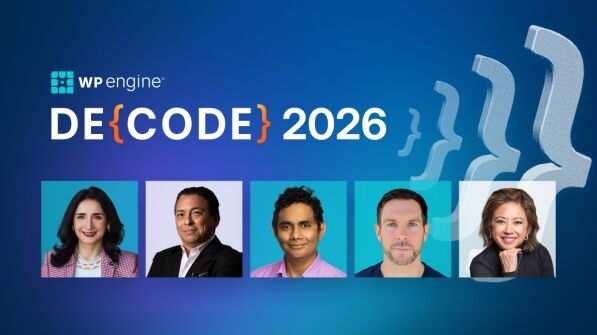

Key Takeaways
We have officially moved from the classic web and into the Intelligent Web: Modern websites that serve both human and agentic audiences simultaneously.
Success in this era requires structuring a site for logical AI consumption and a creative, empathic human experience. Build with a “human first, AI native” philosophy.
Content is now your technical foundation for visibility. Implementing structured data, such as schema.org-compliant fields in ACF 6.8, is essential for citation in AI-generated recommendations.
AI models are now the primary gatekeepers of brand perception, forming opinions and vendor shortlists that humans rely on to inform their decisions. Brands can earn authority through consistent, credible representation across all data sources (online surfaces) that AI aggregates.
Optimizing for the Intelligent Web is the new baseline for success, comparable to the introduction of mobile-responsive design. Leading agencies are pivoting their business models toward AI-centered service offerings and problem-solving to capitalize on this change.
Agentic commerce is the next frontier. The industry is moving toward a future where AI agents (authorized by humans) will initiate and complete transactions. Navigating this requires standardized protocols and robust security.
WP Engine’s seventh annual DE{CODE}, a global virtual conference designed for developers, agencies, and marketers driving web innovation, brought together a massive global audience. With nearly 2,800 live attendees, sessions explored how AI is reshaping the way the web works for both humans and agents.
More than 40 speakers took the virtual stage to share expert insights on everything from machine-readable content to the rise of zero-click commerce. This year’s conference was a deep, unflinching look at what it means to build, market, and grow in a world where AI agents are becoming primary consumers of web content.
Missed the event or want to revisit a session? All videos are now available for on-demand viewing!
The Keynotes: Industry-wide insights
This year’s keynote speakers provided critical definitions for this new era. They explored different angles of the Intelligent Web: what it means, who it affects, what products can help, and how it’s already changing consumer behaviors and perceptions.
CTRL-ALT-DEL: Rebooting Business for the Intelligent Web
Brian Solis, Head of Global Innovation at ServiceNow
Following a welcome message by WP Engine CEO Heather Brunner, Brian Solis, Head of Global Innovation at ServiceNow, shared the current state of the Intelligent Web. He challenged the audience to stop the “slop” and instead use AI to expand human creativity.
He imparted a few impactful lessons and new definitions from DE{CODE}’s virtual podium:
- Cognitive Darwinism (when people offload their thinking to AI tools) is the natural result of intelligent tools without intelligent governance. We need to be wary of a world where AI thinks for us, and instead, build a future in which AI is used to explore and expand our horizons.
- Content relevance, not volume, is the key to earning real authority. You’re not just building for bots, you’re building for the humans who are using bots, so everything you make should still be human-ready. Content alone is no longer king; context is.
- The AI tax is already a burden. 80% of users will accept an AI’s incorrect answer without question, which means AI slop can actually lead to poor decision making and erosion of trust. Taking the time to build trust, then, is quickly becoming a strategic business advantage.
- Because there are no current standards for the Intelligent Web, creators today are setting the bar for how AI and humans interact in the future.
Solis, like the rest of our presenters, believes that the playbook for the Intelligent Web is being written in real time, and agencies, marketers, and developers all have unique roles to play in shaping what’s next.
A New Era: A First Look at What’s Next at WP Engine
Ramadass Prabhakar, Chief Technology Officer, WP Engine
In the second keynote, WP Engine CTO Ramadass Prabhakar and experts from across WP Engine discussed specific tools to help bridge the gap between static website experiences and those positioned to best serve both humans and agents.
- ACF 6.4 & SmartSearch AI: New features like Advanced Custom Fields’ schema.org-compliant structured data and Smart Search’s semantic search make sites more discoverable by AI systems and elevate human experiences once they reach your site.
- No-code AI integration: Senior Product Manager Luke Patterson demonstrated how WP Engine’s Model Context Protocol (MCP) server can transform sites into AI-accessible endpoints and vectorize content to deploy conversational chatbots in under ten minutes, no coding required.
- Enterprise-grade security: Product Manager Krystal O’Connor previewed upcoming enhancements to Global Edge Security (GES), including an all-new “under attack mode” and advanced traffic visibility, both of which will be available in the WP Engine User Portal.
Together, they presented a clear view of the ways WP Engine is evolving to provide the technical infrastructure our customers need to thrive in this new era. They also set the stage for Thierry Muller to expand on his philosophies and future perspectives for the Intelligent Web.
A New Era: The Future of the Intelligent Web
Thierry Muller, VP of AI Products, WP Engine
Part two of the New Era keynote came halfway through the event, featuring WP Engine VP of AI products Thierry Muller. His main message? Adopt a “human first, AI native” philosophy. This framework ensures that while AI drives smarter experiences, the beginning and end of every digital journey remain focused on serving human needs.
A major highlight of the session was Muller’s intro to the concept of agentic commerce, which refers to the ability of AI agents to make purchases on behalf of human users. Right now, identity verification and legal responsibility are the main hurdles to this fast-approaching future state.
He also reiterated the four critical friction points that are causing complexity on the Intelligent Web today.
- Creation paralysis: Leaders are asking how to build faster, better, smarter experiences with seemingly endless options for AI tools that don’t always play well together or have the brand-aware context needed to build effectively at scale.
- The discovery black hole: Clicks are down; it’s the reality we’re living in. Businesses need to adapt to gain visibility in AI systems.
- Agentic incompatibility: Without the right standardized protocols, agents can’t read your site. Therefore, they can’t recommend you in their answers.
- The website experience gap: The Intelligent Web isn’t just for bots. Humans are also expecting richer features. Better site search, more personalized elements, and overall improvements to the browsing experience help ensure that humans are as satisfied with the Intelligent Web experience as the agents they consult.
Ultimately, Muller reasserted WP Engine’s commitment to the open web and investing in tools that will help our customers future-proof websites built on WordPress®[1].
Visible, Credible, Recommended: What Your Brand Needs to Earn in AI Search
Liza Adams, AI Advisor & GTM Strategist, GrowthPath Partners
In her closing keynote, AI Advisor Liza Adams detailed how AI is affecting the B2B buyer’s journey, noting that go-to-market effectiveness has plummeted from 78% in 2018 to just 47% today. How AI perceives your brand today will be the first, and maybe the only, perspective a buyer seeks before making a decision, and it’s safe to assume that AI’s initial perceptions are already influencing real buying habits in a big way.
As we reimagine the buyer journey with AI in mind, she performed a real-time experiment across three different tools using the same prompt to see how different models recommend different products. The varied results showed how different tools have different brand perceptions, even when presented with the same prompt.
Her session also notes a few key considerations for altering how AI perceives your brand:
- Gain consistent, credible representation across all data sources AI aggregates from, including reviews and community discussions.
- High-quality PR and third-party validation is quickly becoming more influential than self-published content.
- Because AI-driven customers arrive at the point of sale far more qualified than traditional leads, the transition from marketing to sales should be held to higher standards.
- Rather than trying to “game” AI algorithms, brands have to focus on being genuinely helpful and clear.
On the Intelligent Web, a strong, authentic brand foundation is the best defense against negative signals that could send potential buyers to your competition.
Targeted tracks for developers, agencies, and marketers
Through three dedicated tracks, attendees dove deep into the specific challenges and opportunities in their roles and had the opportunity to ask questions to presenters directly in the chat.
From using headless as a shortcut for AI wins to the unlocks available through WordPress 7.0, the Developer track focused on the nuts and bolts of building for bots.
Marketers covered strategies for gaining visibility and eCommerce conversions at a time when AI is disrupting how and where users first hear about your brand. For agencies, the discussion boiled down to the conversations and new service offerings that can help clients understand the importance of building and optimizing more intelligent experiences.
Take a look at some of the insights from three of our most-attended sessions of the day!
The ACF update that makes your content machine-readable
In the Developer track, Iain Poulson and Rob Stinson provided a live demo that shows how ACF 6.8 makes WordPress sites machine-readable.
With bots accounting for nearly 40% of web traffic in some regions, version 6.8 provides the structured foundation necessary to serve them. Advancements in 6.8 include:
- Enabling developers to map ACF fields directly to schema.org attributes in JSON-LD format to harness the universal vocabulary that AI tools and search engines use to accurately parse content.
- Maximizing the functionality introduced through the Abilities API in WordPress 6.9 to create seamless communication with external tools like AI agents.
- Introducing new WP-CLI commands that allow users to automate field group management and JSON data sync processes.
Poulson also demonstrated how ACF 6.8 can work with AI to transform a simple CSV file into a fully functional WordPress site in minutes, automatically recommending post types, creating field groups, and mapping taxonomies.
Looking ahead, ACF is experimenting with AI-powered field suggestions and content generation to help developers model complex sites more quickly and intuitively.
What the data reveals about agencies winning with AI
In the Agency track, Nicholas Petroski of Promethean Research presented exclusive 2026 findings on how AI is reshaping the industry. He likened the current era to the mobile-responsive revolution, noting that 73% of agency professionals view AI optimization as equally revolutionary.
Key insights from the report include:
- Optimizing for AI is the new baseline for modern web development and user engagement.
- Leading agencies (those investing in AI partnerships and education) are three times more likely to deliver better operational efficiency and engagement than laggards.
- As AI commoditizes technical execution, agencies are shifting their value proposition toward strategic problem-solving and deep specialization.
- Leading agencies are creating entirely new, AI-centered service offerings and retainer models.
- While the pace of change is intense, smaller, nimble agencies are uniquely positioned to iterate quickly and capitalize on this moment.
Petroski’s closing advice: Chasing tools will get you nowhere. Instead, identify the high-value problems you want to solve, and use AI to solve them faster.
Unlocking eCommerce growth: Content as the AI conversion engine
In the Marketer track, experts from Amsive and 829 Studios explored the rise of zero-click commerce, where users tap AI agents to conduct their product research and visit websites only when they’re ready to convert.
To gain product-level visibility, the technical structure of your marketing content is more important than ever. Here are some key insights from the panel:
- While overall organic traffic is on a sharp decline, conversion rates are rising for those who do visit a site.
- Goals are shifting away from ranking for human clicks and toward inclusion in AI-generated recommendations.
- It’s time to treat your CMS as a data layer, not just a publishing tool. Machine-readable schema and structured data are now more important than shiny marketing videos that LLMs can’t easily digest.
- Product Description Pages (PDPs) are now the extra validation layers that build trust for humans and bots through social proof (like reviews) and technical clarity (through proper schema).
Panelists insist that brands investing in machine-readable content and trust signals for humans will be the commerce leaders of the future.
Watch All DE{CODE} 2026 Sessions On Demand
Thank you to everyone who joined us for WP Engine’s DE{CODE} 2026. Whether you tuned in for a single keynote or stayed for every session, your questions and thoughtful engagement are what bring this event to life.
Head over to our events page to watch all the sessions on demand!


