Get Started

Key Takeaways
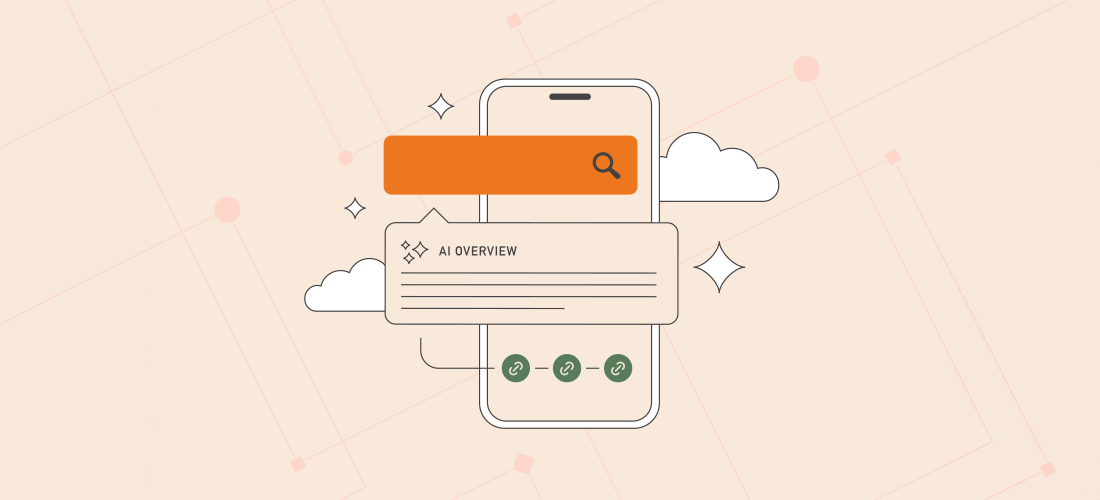
AI search is changing how buyers discover brands, with 68% of searches ending without a click. When AI summaries appear in search results, users click traditional results only 8% of the time, showing that discovery is moving to third-party interfaces.
Despite lower overall website traffic from search engines, visitors arriving from AI surfaces arrive more qualified. Data from Semrush reveals that AI search visitors convert at roughly 4.4 times the rate of traditional organic visitors.
Brands are successfully reviving traditional offline tactics to combat audience fatigue from automated interactions. Marketers are deploying physical catalogs, direct mail, podcasts, and live events to earn human trust and capture attention in crowded markets.
Technology is now being used to supercharge offline marketing with precise digital insights. Modern campaigns merge CRM data and website analytics with direct mail and events to create tangible, highly personalized human experiences.
Websites must now serve a dual purpose to succeed in the era of agentic discovery. Platforms like WordPress® provide the open, extensible foundation needed to remain legible to machine crawlers while delivering engaging, high-conversion experiences for human visitors.
It used to be a safe bet that the first thing a buyer learned about your brand came from something you created: A homepage, a campaign microsite, a commercial with an earworm of a jingle.
That’s not always the case anymore. The first thing a buyer learns about your brand might be something a third-party model is saying about you. It’s an automated opinion assembled from sources you don’t own, delivered through an interface you can’t control, during a moment you’ll never know took place. The page you spent weeks or months perfecting is still important, but it’s probably not where your customer relationships start.
While marketers are looking at ways to better structure their content for AI visibility (a worthy goal), other, older tactics are also making a comeback. Leaning on strategies they had stopped using years ago, brands can gain relevance and connection as the modern marketing playbook changes once again.
The old playbook for brand visibility
It wasn’t so long ago that the current playbook for marketing—one centered around creating targeted digital experiences for an online audience—was an industry disruption, not the standard.
Moving from the “Mad Men” era of advertising to targeted digital experiences took decades. Brands were working with brand-new (at the time) “digital agencies” to restructure their tactics to fit new technology before anyone really knew what to do with it. To make a splash, marketers had to try new things before they were ready, put their big ideas into applications nobody had built before, and rebuild their skillsets.
That’s the story WP Engine told in make|SHIFT, the feature-length documentary we released in 2020. It was a convergence of ideas from more than 40 agency founders and industry pioneers that traced how branded messages that once lived in TV, radio, print, and outdoor were evolving into immersive digital experiences.
The film captured an interesting pattern: Technology changes, discovery relocates, and the industry has to adapt in order to meet audiences where they are. Right now, we’re seeing that pattern again, but it’s happening much faster than last time.
What changed in the last two years?
So how is AI search changing the buyer journey? The data shows two major changes: Clicks are down, but engagement is up.
SparkToro found that fewer than one in three Google searches now send a click to any website. That’s a 9.5-point drop in click-generating searches in just two years. Search Engine Land’s coverage of the same trend echoes SparkToro’s numbers: both put zero-click searches at roughly 68% in early 2026.
Pew Research uncovered what’s behind the behavior. Studying 68,879 real Google searches, it found that when an AI summary appears, users click a traditional result only 8% of the time, versus 15% without one. For clicks on a citation within the summary, users click just 1% of the time. People are finding easier answers more quickly, so sessions are ending sooner and sending less traffic back to websites overall.
The good news is that traffic arriving from AI surfaces is unusually engaged. Semrush found AI search visitors convert at roughly 4.4x the rate of traditional organic visitors.
Comparison shopping didn’t disappear, but that research has moved into a layer you have very little control over. Awareness and consideration now happen inside someone else’s answer, and if buyers do show up at your digital door, it’s because they’re almost ready to choose you.
Why marketers are reaching backward
The tactical response to AI disruption has been two-fold. The first half involves structuring your content and tech stack for greater AI visibility, and that’s what’s getting the most industry buzz.
The second half of the equation is more interesting. They’re reaching for an audience that’s exhausted by automated interactions by implementing tactics from the old playbook, like direct mail, print, live events, podcasts, physical catalogs, and newsletters.
The argument for the old-school comeback is that these channels aren’t returning because of some great digital failure. They’re returning because human trust psychology never actually changed, and buyers are skeptical of automated outreach that costs very little to produce. Now, marketers are using existing digital insights to enhance traditional marketing methods and make them work better in an era of agentic discovery.
For example, take direct mail. In the old world, almost everyone got the same mailer, and the cost to print and mail a postcard took up most of the project budget. When the industry moved to digital marketing, mailers became emails, pop-ups, and interrupters in controlled spaces. It was cheaper to produce and provided more insight into what resonated with audiences.
Now, we have the chance to merge these two tactics. Send that direct mailer, but create it using the insights your website has already gathered. Technology can conduct prospect research, develop the right offer, and propose the message you send, but increasingly, those digital insights are being used to provide a more tangible, human experience.
The same argument is cropping up everywhere: old-school tactics are back. Inc. has tracked it, saying throwback tactics are winning attention precisely because they’ve become so rare. Forbes has even made the economic case for direct mail winning back customers. HubSpot’s 2026 State of Marketing argues that as consumers tune out AI-generated content, buyer attention is returning to spaces like newsletters, podcasts, and video.
The Content Marketing Institute interviewed experts on what marketing trends they expected to succeed in 2026, and Jacqueline Loch, executive vice president of strategy and revenue at AZURE Media, laid out the strategy beautifully: “Earn attention and be worthy of your customer’s time by making print worth keeping, newsletters worth opening, events worth attending.”
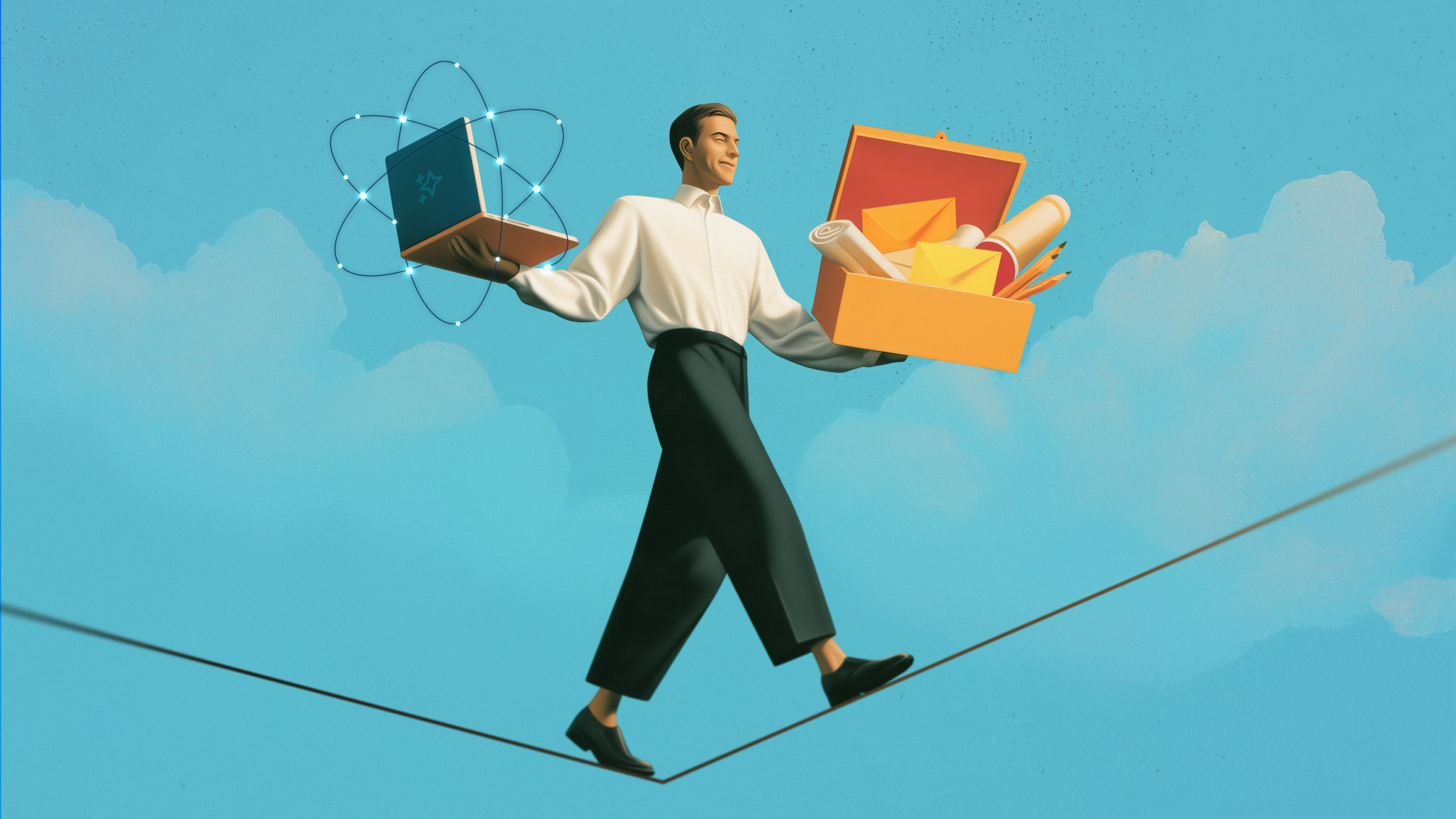
None of this is a mandate to stop using technology. On the contrary, it’s a mandate to make better use of the data you’ve already collected. Direct mail can be triggered, personalized, and measured against CRM data. A podcast can provide a citable source for AI systems to ingest, and you can link directly to it on your home page. An in-person event provides a room full of people who can provide exactly the kind of first-party, verifiable quotes that models want to include in generated answers, and you can use them for a case study or event recap blog.
The tactics may be old, but the ways we use technology to refine how we talk to our customers and take advantage of new systems? Those are new.
Where the foundation comes in
The foundation of this new way of working is still, more often than not, your website, which now has to do two jobs at once: be legible to machines and be worth a human’s time (and conversion!) when they arrive.
This is why WordPress®1 websites still matter: they provide an open, extensible foundation that doesn’t force you to choose between those two jobs.
Being legible means providing structured data that tells a model what your organization is and who your experts are through clean semantic markup served up on fast, crawlable pages. The immersive digital experiences that make|SHIFT explored back in 2020 can still earn their keep today, as they both gather the insights you’ll use to continue refining your tactics and provide the destination those tactics lead back to. They just have to make a few changes to keep up.
The pattern continues: Old systems are once again adapting to a new avenue for consumer discovery. The only difference is that the cycle is happening faster than ever, so the time to start moving is now.
- WP Engine is a proud member and supporter of the community of WordPress® users. The WordPress® trademarks are the intellectual property of the WordPress Foundation, and the Woo® and WooCommerce® trademarks are the intellectual property of WooCommerce, Inc. Uses of the WordPress®, Woo®, and WooCommerce® names in this website are for identification purposes only and do not imply an endorsement by WordPress Foundation or WooCommerce, Inc. WP Engine is not endorsed or owned by, or affiliated with, the WordPress Foundation or WooCommerce, Inc. ↩︎