Get Started


Key Takeaways
Reader journeys are becoming more fragmented, making it essential to connect stories, create clear paths through related coverage, and support every entry point into your content.
Readers expect more than reporting alone, placing greater value on explanation, analysis, and content that helps them understand why a story matters.
Trust in news continues to decline, reinforcing the need for transparent publishing practices and robust content governance that helps publishers demonstrate credibility.
Changing reader behaviors are putting new demands on publishing operations. Flexible editorial workflows, actionable audience insights, and the right digital publishing platform, like WP Engine Newsroom, help editorial teams respond faster and improve continuously.
Produced annually, the Reuters Institute Digital News Report is one of the publishing industry’s most influential pieces of research.
Based on insights from almost 100,000 people across 48 global markets, the latest edition helps publishers understand media industry trends for 2026, including shifts in news consumption and trust, discovery, and emerging tech.
But understanding the trends is only the starting point. What matters is how publishers respond to them.
Here we summarize the biggest findings from this year’s report, and explore what they mean for enterprise publishers, content teams, and publishing operations.
The biggest themes shaping digital publishing in 2026
The Reuters Institute Digital News Report highlights a number of important developments across the digital news landscape. The findings below reflect some of the most significant changes affecting how audiences discover, consume, and engage with news.
Audience habits continue to fragment
For the first time, social media and video networks have become the leading weekly source of news, overtaking all other channels.
Readers now encounter journalism across a growing mix of platforms, with pathways between publishers and readers becoming less direct and more fragmented, particularly among younger audiences.
📊
54% of people now use social media and video networks as a weekly source of news
51% rely on publishing websites and apps
Video is changing user behavior
Online news video now reaches more people than broadcast TV in almost all of the markets studied. Much of that growth is happening on YouTube, TikTok, and Instagram rather than publisher websites and apps.
Creator-led content is also now a regular part of the news ecosystem. Reuters found that creators are widely seen as more entertaining and easier to understand than traditional news media, although they are viewed as less trustworthy and impartial.
📊
77% of people now watch online news videos weekly
27% now get news from creators each week
AI is becoming part of the content journey
AI is becoming another way audiences interact with news.
While adoption remains relatively low overall, Reuters reveals a growing use of AI chatbots to summarize stories, explain complex topics, and answer follow-up questions.
This behavior is especially prevalent among younger audiences, making AI an emerging part of the news journey rather than a replacement for traditional publishers.
📊
AI chatbot use for news has risen from 7% in 2025 to 10% in 2026
42% of AI news users say they use chatbots to ask follow-up questions
Trust in news content is under more pressure than ever
Trust in news has fallen to its lowest level since Reuters began tracking it in 2015.
Concerns about misinformation are also continuing to rise, with many people worried about distinguishing fact from fiction online.
The Reuters Institute Digital News Report also found that trust varies significantly depending on where people consume news, with established news brands continuing to outperform social media, video platforms, and AI tools.
📊
Global trust in news has fallen to 37%
62% are concerned about what is real and what is fake online
Monetization remains a challenge
The proportion of people paying for online news has remained unchanged from last year.
However, although the number isn’t declining, the report suggests it may now be even harder for publishers to grow reader revenue as audiences spend more time discovering news on third-party platforms rather than publisher websites and apps.
📊
17% pay for online news across the 20 markets tracked
What these digital news trends mean for enterprise publishers
The report highlights what’s changing. The next step is deciding how to respond.
Here are the priorities enterprise publishers should focus on to turn those findings into practical editorial and operational improvements.
Design for fragmented discovery
Fragmented discovery means more readers are arriving on individual stories through search, social media, video platforms, and AI chatbots, often without the context that’s usually provided by a homepage or section page.
Content teams should design connected editorial experiences that anticipate those fragmented entry points, helping readers discover relevant stories, background information, and supporting content wherever they begin.
1. Support every entry point
Every article should quickly orient the reader.
Use clear summaries, scannable page structures, and consistent story formats that communicate the key information immediately, before inviting readers to explore further.
2. Build context into every story
Readers shouldn’t have to leave your publication to understand how an article fits into the bigger picture.
Use explainers, timelines, FAQs, related coverage, and supporting resources to connect individual stories with the wider topics, people, and events they relate to.
Every article now has to earn the next click. Publishers that connect stories, provide context, and anticipate reader curiosity will keep audiences engaged for longer.
3. Create connected editorial experiences
Connect reporting with related stories, topics, authors, explainers, and background coverage to create richer editorial experiences that encourage further exploration.
As well as powerful search capabilities, give readers clear paths through connected coverage to encourage them to stay on your site instead of leaving to find additional context elsewhere.

Adapt to changing reader expectations
Video and creator-led content are changing expectations around how stories are presented. Readers are comfortable consuming news through a combination of text, video, and audio, choosing the format that best suits what they want to understand in the moment.
Enterprise publishers don’t need to mimic social platforms, but they should understand why they resonate with audiences and adapt their own approaches accordingly.
1. Use visual-first storytelling
With audiences placing greater value on visual, accessible news coverage, publishers need to think about article formats from the outset rather than treating them as a presentation choice.
Build richer stories with interactive charts, timelines, video, animated content, and other dynamic content elements where they improve understanding at a glance.

2. Enable real-time coverage
Social platforms and creator-led formats make news feel current, visible, and continuously updated.
Use live blogs, clear timestamps, rolling updates, and prominent “what’s changed” markers to help readers follow developing stories as they unfold.

3. Write for skimmers and deep readers
Social media lets readers move quickly between headlines or spend hours exploring a topic in greater depth.
Publishers can respond to those changing behaviors by structuring stories for both, using clear summaries, scannable layouts, and layered storytelling that helps readers move naturally from key takeaways into richer coverage at their own pace.
📌 Quick sense check:
☐ Can readers understand the story in under a minute?
☐ Is further context available without leaving the page?
☐ Are related stories easy to find?
☐ Are key facts easy to scan?
☐ Is there a clear path to explore the topic further?
Prepare for AI-assisted news consumption
AI is giving readers new ways to interrogate content. Instead of accepting stories at face value, a growing number are using AI to summarize, explore, and question what they read.
Publishers should respond by structuring content so that AI can interpret it more effectively, explaining more than just the facts, and anticipating the questions readers are likely to ask next.
1. Structure content for LLMs
AI tools work best when content is clearly structured and easy to interpret.
Use descriptive headings, concise summaries, and logical article structures that prioritize the most important information, making it easier for both readers and AI platforms to understand and navigate your content.
2. Add context and clarity
People increasingly expect content to explain what happened, why it matters, and how it connects to wider events.
Meet those expectations by providing context, definitions, supporting evidence, and expert insight that help readers make sense of the story.
3. Anticipate follow-up questions
The readers most engaged with news are among the earliest adopters of AI, with many using AI to ask follow-up questions and explore topics in greater detail.
Publishers should support that curiosity by anticipating the next logical question, expanding on key points, and providing the additional context readers are likely to look for.
Make credibility visible
Falling trust in news means credibility has to be demonstrated, not assumed. Publishers can no longer rely on reputation alone.
Readers want visible reassurance that information is accurate, accountable, and supported by credible sources.
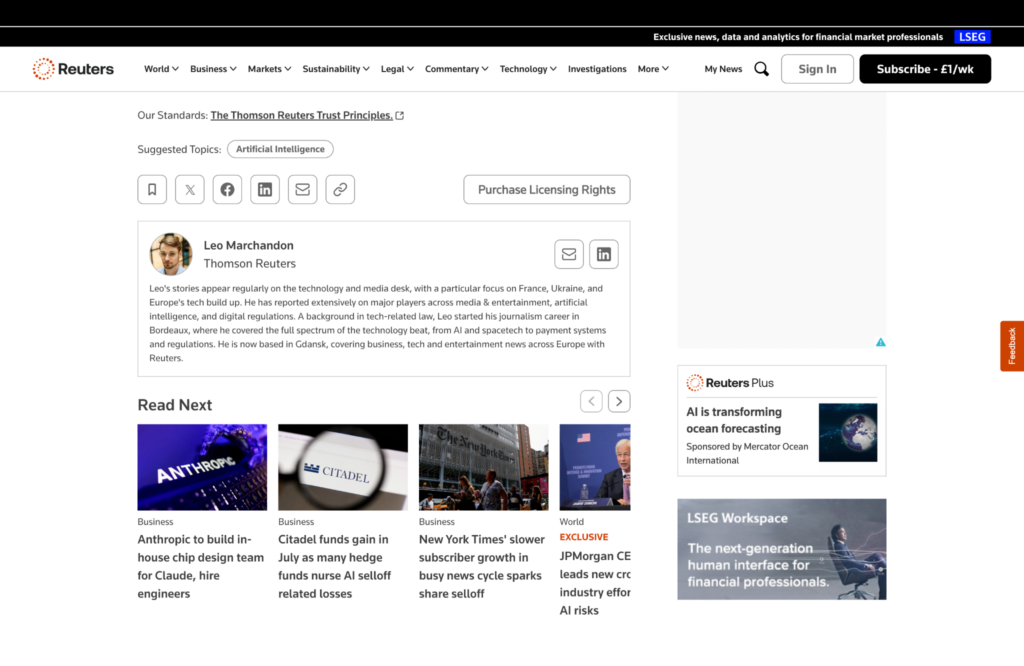
Every page should reinforce credibility through clear authorship, transparent sourcing, and editorial standards that readers can see for themselves.
1. Highlight your credentials
Every article should clearly show who created it, where the information came from, and when it was published or updated.
Make author expertise, source attribution, and editorial standards easy to find so credibility is immediately visible.
2. Increase editorial transparency
Transparency helps readers understand not only the content but the editorial decisions behind it.
Clearly distinguish news, opinion, analysis, and sponsored content, and make corrections, update timestamps, AI disclosures, and reporting methods visible where appropriate.
| 🔎 What readers want to know | 🤝 On-page trust signals |
| Who wrote this? | Author biography, credentials, specialist expertise |
| How was this reported? | Reporting methods and methodology |
| Where did this information come from? | Source attribution, citations, supporting evidence |
| Can I verify this story? | Source documents, datasets, embedded evidence |
| Has the story changed? | Correction notices, update notices, last updated date |
| What kind of content is this? | News, opinion, analysis, sponsored content labels |
3. Embed trust into editorial workflows
Trust is built through consistent editorial practices, not individual articles.
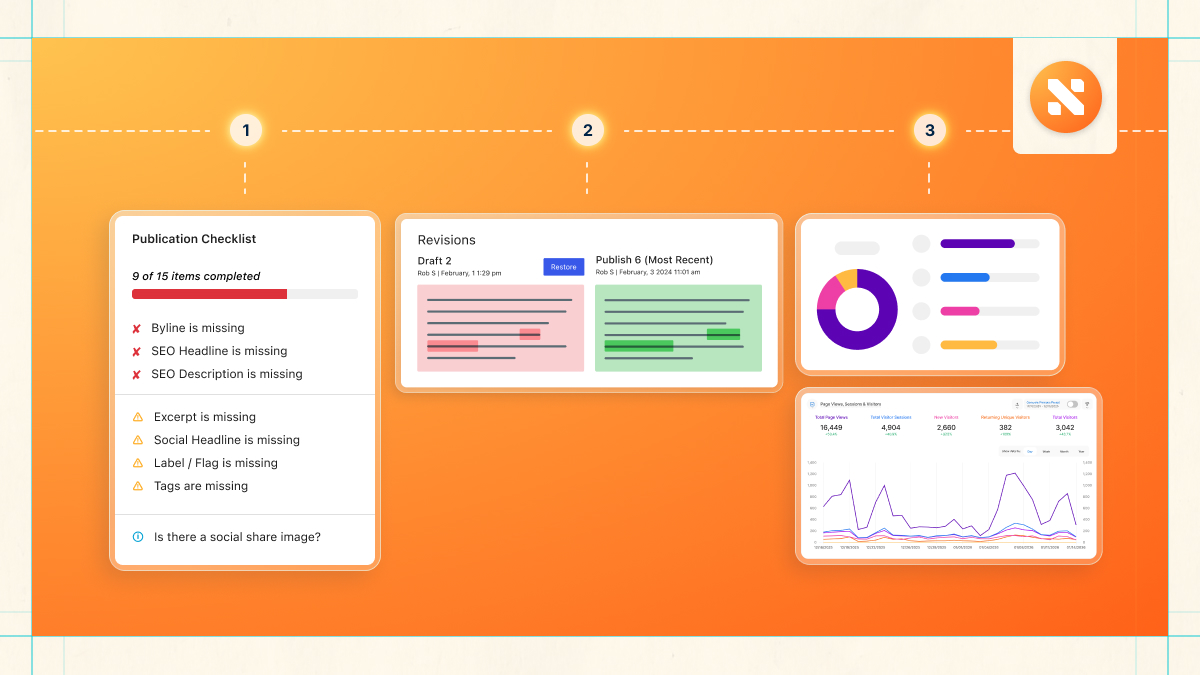
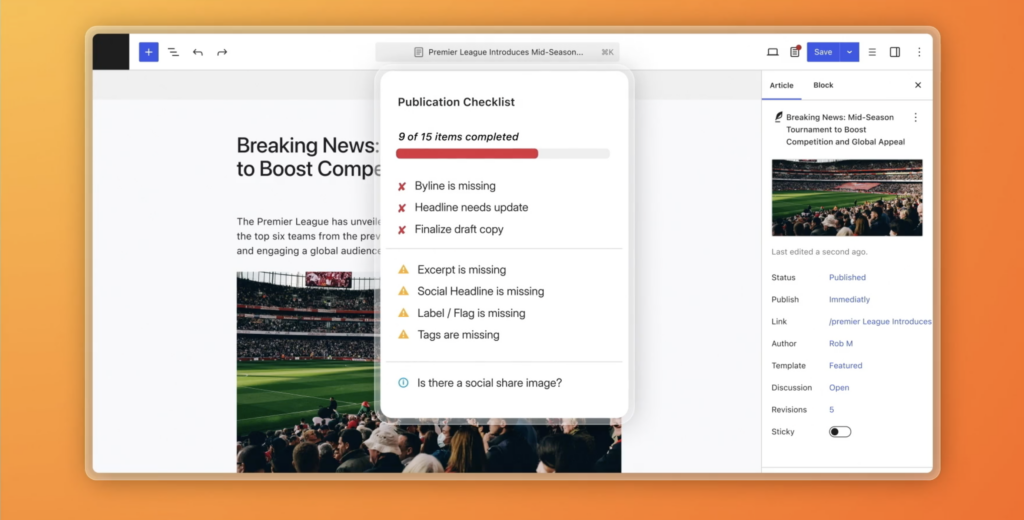
Build governance into the publishing process with clear review stages, approval workflows, revision tracking, and quality controls that help every story meet the same editorial standards before publication.
See how Newsroom supports editorial governance
Publication checklists, configurable workflows, revision tracking, and role-based approvals help enterprise publishers build consistent editorial standards into every stage of the publishing process.
Strengthen the foundations of monetization
Flat subscription growth places greater emphasis on understanding the readers publishers already have.
Actionable audience insights should inform editorial decisions, helping teams strengthen engagement, build loyalty, and support sustainable reader revenue.
1. Measure meaningful engagement
Focus on engagement metrics that reflect reader value rather than raw traffic.
Use audience analytics, including engagement metrics, scroll tracking, heatmaps, and conversion funnels, to understand how readers interact with stories, where they stop reading, what encourages them to explore further, and which journeys lead to registrations or subscriptions.
2. Give editorial teams better data, not just more data
Analytics should support stronger editorial decisions, rather than solely report performance. That means giving teams access to the right data, rather than overloading them with information they can’t use or don’t need.
Before adding a metric or report to an editorial dashboard, ask three questions:
- Is it relevant? Does this data support an editorial or commercial objective?
- Is it insightful? Does it explain why content performed the way it did, not just what happened?
- Is it actionable? Will it influence future coverage, content formats, or reader journeys?
3. Invest in what keeps readers coming back
Use audience insights to identify the topics, formats, and experiences that encourage readers to return.
Prioritize the content, formats, and experiences that build regular reading habits, strengthen loyalty, and create more opportunities for registration and subscription.
Reader revenue grows when editorial teams really understand which stories bring readers back and strengthen loyalty. Analytics should make those patterns much easier to identify and act on.
Evaluate your publishing platform against today’s editorial challenges
Editorial strategy is only part of the equation. The right newsroom technology should make it easier to put these recommendations into practice.
Use the questions below to assess whether your current platform supports the requirements identified in the latest Reuters Digital News Report.
| 💡 Reuters insight | ✅ Can your publishing platform enable… |
| Readers discover content through more entry points than ever before. | Related content, topic pages, and content recommendations to be presented consistently across articles. |
| Readers consume news in different ways, with expectations shaped by social platforms. | Flexible templates and content structures that support different reading experiences without requiring custom development. |
| Readers value explanation and context, with AI users particularly using chatbots to ask follow-up questions and better understand stories. | Non-tech teams to add explainers, timelines, FAQs, and related content to articles quickly and consistently. |
| Video continues to grow as a way of consuming news. | Editors to combine text, video, audio, and interactive content without developer support. |
| AI in publishing is becoming another way for readers to discover and interrogate news. | Structured content that’s easy for AI systems to interpret while preserving editorial context. |
| Readers want visible reassurance that information is credible. | Templates and workflows that make trust signals a consistent part of every article. |
| Flat subscription growth places greater emphasis on understanding audience behavior. | Actionable analytics that help editorial teams understand engagement, loyalty, and subscription performance. |
Modernizing your publishing operations with WP Engine Newsroom
The Reuters Digital News Report makes one thing clear – reader expectations will continue to evolve. Publishers preparing for the future of digital publishing need editorial operations that can adapt without slowing story production or increasing technical overhead.
WP Engine Newsroom is designed to help editorial teams respond faster, maintain high editorial standards, and continuously improve the reader experience through configurable workflows, built-in governance, and actionable insights.
Support faster editorial workflows
Breaking news, live updates, and evolving stories demand publishing workflows that improve time-to-publish without compromising editorial standards.
WP Engine Newsroom brings story creation, collaboration, review, and publishing together in a single workspace.
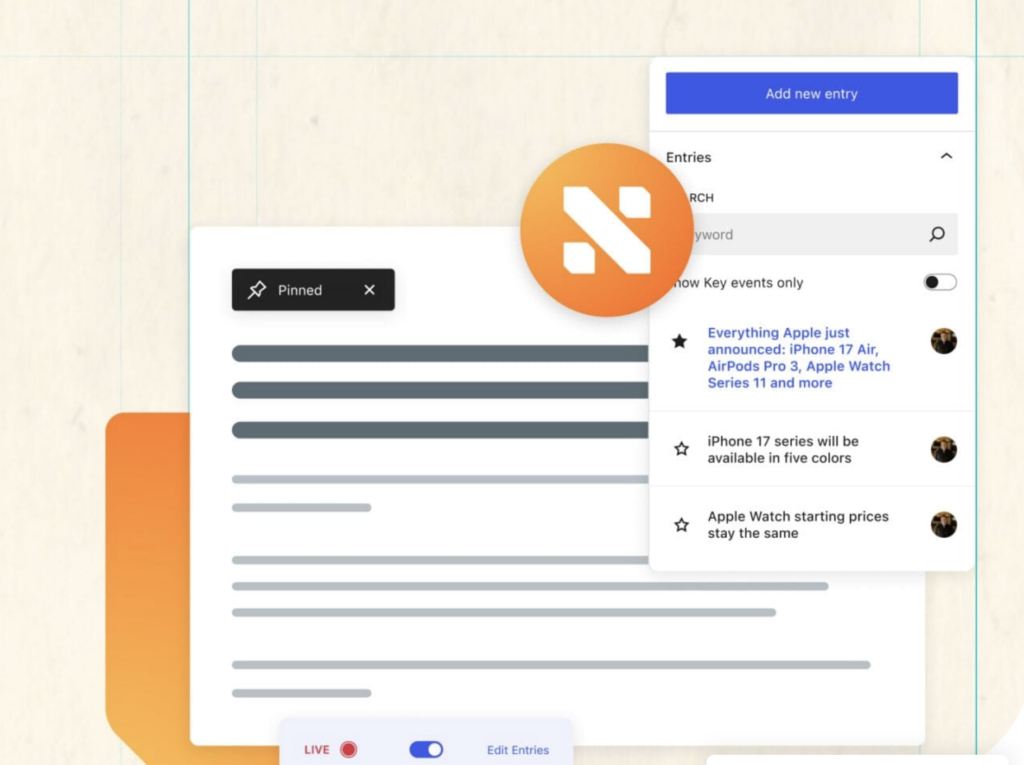
Live News helps editors publish chronological updates as stories develop.
Teams can manage approvals, feedback, and revisions through assignable reviews, workflow statuses, and visual revisions, without relying on email or disconnected tools.
Unpublished Edits allow teams to safely update live stories without publishing changes before they’re ready.
Connect editorial, product, and audience teams
The responsibility of delivering great reader experiences doesn’t just rest on editorial teams. Product, commercial, design, and audience teams all need visibility into the publishing process, with the tools to collaborate without creating additional handoffs or slowing story production.
Newsroom brings publishing, collaboration, and audience insights together in one platform.
Secure previews and DAM integrations help teams review and enrich stories, while integrated analytics help editorial and audience teams understand how readers engage with content and identify opportunities to improve performance.
Build on a platform that can evolve
Publishing requirements won’t stand still, and neither should the platforms that support them.
Whether responding to new reader behaviors, launching new story formats, or supporting multi-channel publishing across brands, editorial teams need a platform that can adapt without requiring extensive redevelopment.
Building on WordPress for publishers, WP Engine Newsroom provides the flexibility to evolve over time through structured content modeling, configurable workflows, multi-site publishing, integrated analytics, and AI-powered reader experiences.
Combined with built-in governance and enterprise-grade delivery, it gives publishers the flexibility to respond to changing reader behaviors, support new ways of storytelling, and build editorial operations ready for what comes next.
Modernize your publishing operations
As reader behaviors continue to evolve, publishers need editorial platforms that can adapt without compromising speed, governance, or quality. See how enterprise publishers create, govern, publish, and optimize content from a single editorial platform.
FAQs on the Reuters Digital News Report 2026 findings
How can editorial teams adapt to AI-assisted search without losing direct site traffic?
Instead of competing with AI discovery tools, publishers should optimize for how AI digests information. By building explainers, timelines, and Q&As directly into stories, newsrooms can answer follow-up questions on-page and keep inquisitive readers from leaving for an AI chatbot.
Why are legacy CMS platforms failing to support modern reader revenue models?
With subscription growth flattening, publishers can no longer rely solely on paywalls or surface-level pageviews. Legacy platforms lack integrated analytics, leaving editorial teams blind to the specific content experiences that actually drive long-term engagement and reader loyalty.
How should enterprise publishers audit their CMS against changing reader behaviors?
Publishing leaders should evaluate whether their platform enables operational speed or creates technical bottlenecks. Audit whether non-technical editors can launch visual formats, live updates, and background explainers without developer support, while automatically embedding trust signals like author bios and update timestamps across every piece.
What operational changes are needed when every article becomes a primary entry point?
Because readers arrive directly via social, search, and AI links, every article must act as a standalone landing page. Newsrooms need modular publishing templates that provide instant story context, while cross-functional teams use shared audience data to continuously optimize entry points.
How can publishers make trust visible without adding more work for editorial teams?
Trust must be built directly into publishing workflows rather than left to individual editors. Using standardized templates with automated author profiles, source attributions, AI disclosures, and update notices ensures consistent credibility across every story without slowing down production.