 Get Started


Key Takeaways
AI is changing content discovery, but trusted journalism remains publishers’ biggest advantage
ITP Media is preparing for an AI-first future by combining editorial strategy with modern publishing technology
WP Engine Newsroom helped ITP improve editorial efficiency, achieve a 40% Core Web Vitals uplift, and reclaim nearly 30% of editorial support time.
The publishers that thrive will pair AI with stronger workflows—not replace journalism with it.
AI is reshaping how audiences discover, consume, and engage with content, forcing publishers to rethink everything from editorial strategy to WordPress publishing workflows.
No doubt about it.
But according to Charlotte Cijffers, Chief Digital Officer at Dubai-based ITP Media Group, preparing for an AI-first future isn’t about chasing every new technology trend. It’s about strengthening the fundamentals of great publishing while giving publishers the tools they need to adapt.
During DE{CODE} 2026, Charlotte joined Iain McPherson, Principal Media Enablement Manager at WP Engine, to discuss how ITP Media is positioning itself for long-term growth in an AI-driven landscape—and why investing in trusted journalism, direct audience relationships, and a modern digital publishing platform has become central to that strategy.
As one of the Middle East’s largest media companies, ITP Media publishes iconic brands including Arabian Business, Harper’s Bazaar Arabia, and Complex Middle East.
Like publishers everywhere, the company is navigating a rapidly changing digital landscape while modernizing the technology that supports its publishers through WP Engine Newsroom—an investment that has already improved editorial efficiency while contributing to a 40% improvement in Core Web Vitals across the Arabian Business platform.
Watch ITP Media at DE{CODE} 2026 on demand
AI Changes the Rules—But Not the Fundamentals
For the past two years, AI has dominated conversations across the publishing industry.
From AI-assisted content production to AI-powered search experiences, many publishers are questioning how audiences will continue to discover and engage with their content.
Charlotte believes the industry may be looking at the challenge through the wrong lens.
Publishing as an industry has been through many fundamental changes long before AI entered the conversation.
She pointed to Google algorithm updates, declining social referral traffic, the rise of influencers, shifting privacy expectations, and the deprecation of third-party cookies as examples of previous industry disruptions that required publishers to rethink audience acquisition, revenue models, and content strategies.
AI represents another significant shift—but not an unprecedented one.
Ultimately, users are still engaging with our brands; they’re simply arriving through different routes.
Rather than reacting to every new development, Charlotte believes publishers should continue focusing on what has always driven long-term success: producing quality journalism, earning audience trust, and adapting thoughtfully as technology evolves.
Direct Audience Relationships in Modern Digital Publishing
While much of the conversation around AI has focused on declining search traffic and AI Overviews, Charlotte believes the more important strategic question is how publishers strengthen relationships with audiences they own.
The direct relationship with your audience remains the most valuable thing any publisher has.
As audience journeys become increasingly fragmented across search engines, social platforms, newsletters, apps, and AI-powered discovery experiences, publishers have fewer guarantees about where readers will come from tomorrow.
That makes owned channels increasingly valuable.
The stronger your direct audience relationship, the more insulated you are from future disruptions.
For ITP Media, that philosophy extends beyond audience strategy.
It has also shaped the company’s investment in editorial workflows and publishing infrastructure, enabling teams to spend less time on operational overhead and more time strengthening direct audience relationships.
Many publishers are already diversifying through subscriptions, events, consultancy services, ecommerce, and premium content. As traffic sources continue evolving, these direct audience relationships become one of the strongest sources of long-term resilience.
Why Original Journalism Still Wins in AI Digital Publishing
One of the most surprising themes from the session was Charlotte’s belief that AI may actually increase the value of original reporting.
While many assume generative AI will reduce demand for journalists, Charlotte sees the opposite happening.
Journalistic skill and quality have never mattered more.
As AI-generated content becomes increasingly common, simply repackaging information that already exists online becomes less valuable. Original reporting, proprietary research, exclusive interviews, and first-party data become the content that differentiates publishers.
At ITP Media, that has meant placing greater emphasis on authority, research, and quantitative data across its portfolio of publications, while investing in editorial workflows that give journalists more time to produce original reporting instead of managing publishing processes.
Being first is no longer enough. You need to add verified value to a story.
For publishers competing in crowded markets, this shift presents an opportunity. Organizations that consistently invest in trusted journalism and unique expertise are more likely to stand out—for both human readers and AI-powered discovery platforms.
Building Trust with Transparent AI Publishing Workflows
If AI changes how content is created, it also changes how audiences evaluate trust.
Charlotte believes publishers who are transparent about how AI fits into their editorial process will ultimately strengthen audience relationships.
I think there will be more consequences for publishers that fail to communicate openly about how, why, and when they use AI than for those that do.
Rather than hiding AI-assisted workflows, media companies should clearly explain where technology supports publishing efficiency while maintaining editorial oversight.
Transparency, she argues, will become another competitive advantage as audiences become increasingly aware of how digital content is produced.
Publishers that are open about where AI creates efficiencies will be the publishers that audiences trust.
From Strategy to Execution
Throughout the conversation, one theme became increasingly clear: succeeding in an AI-first publishing landscape isn’t simply about adopting new technologies.
It’s about giving publishers the infrastructure, workflows, and governance they need to execute a stronger publishing strategy consistently.
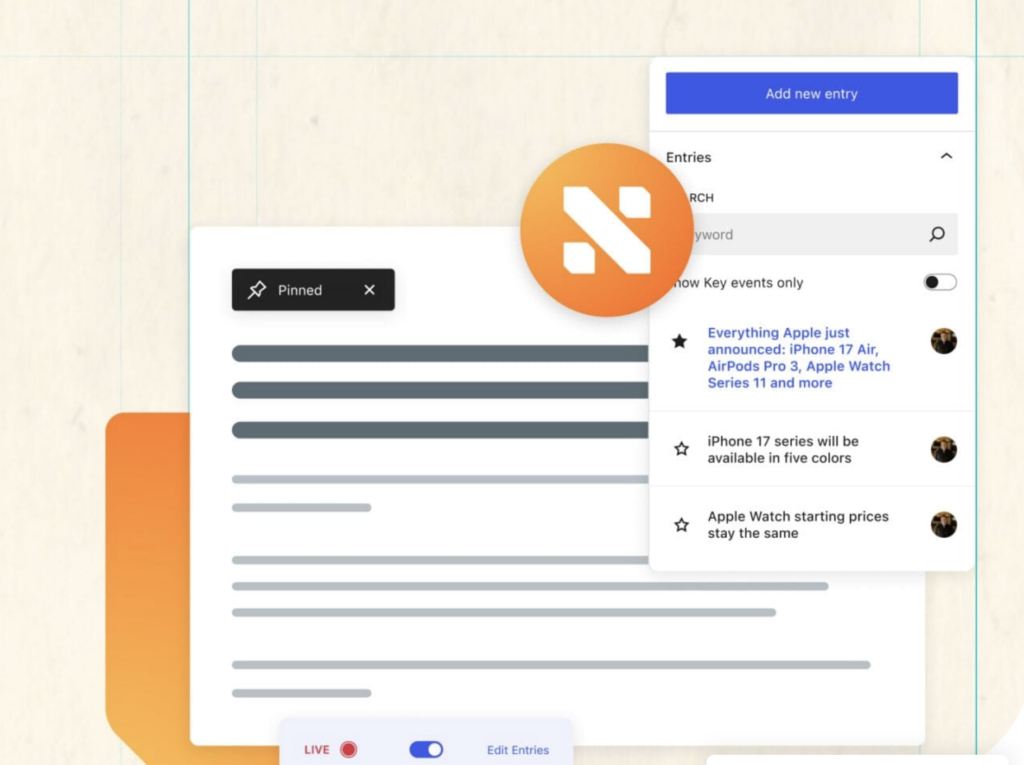
For ITP Media, that meant pairing its editorial vision with WP Engine Newsroom—a digital publishing platform built specifically for modern publishers to streamline editorial workflows, improve collaboration, and support high-quality journalism at scale.
Interested in modernizing your editorial workflows?
Learn how WP Engine Newsroom helps publishers streamline content operations, improve collaboration, and deliver better digital experiences by requesting a demo today.
How Editorial Workflow Software Helped ITP Modernize Publishing
For modern publishers, creating great journalism is only part of the equation.
As editorial teams publish across websites, newsletters, social platforms, and emerging AI-powered discovery experiences, the technology supporting those teams has become just as important as the content itself.
As part of the relaunch of Arabian Business and its broader digital transformation strategy, ITP looked to simplify editorial operations without compromising governance, collaboration, or publishing quality.
To support that strategy, ITP standardized on WP Engine Newsroom to simplify editorial operations across its publishing teams. Rather than asking editors to adapt to new processes, the platform helped streamline existing workflows while improving collaboration, governance, and publishing consistency.
The investment delivered measurable improvements for both readers and publishers.
Across the Arabian Business multisite platform, ITP recorded a 40% improvement in Core Web Vitals, creating a stronger technical foundation for search visibility, user experience, and audience engagement as content discovery continues to evolve.
For Charlotte, however, the most meaningful improvements came from the editorial teams themselves.
Editors consistently highlighted Newsroom’s publication checklists, live-editing capabilities, and collaborative workflows as among the biggest day-to-day improvements.
Rather than introducing entirely new editorial processes, the platform reduced friction within existing ones—making it easier for teams to publish consistently while spending less time on manual checks and internal coordination.
The publication checklist embedded inside the CMS is super powerful for us.
Charlotte also emphasized that Newsroom delivered more than operational efficiency.
This isn’t simply a technology tool or an efficiency tool. It’s a tool that enables better collaboration, better coaching, and better editorial development across the organization.
The operational impact quickly became visible across newsroom teams.
ITP saw fewer retraining requests, fewer CMS-related support questions, and fewer user-generated issues following implementation.
According to its Head of Audience, the streamlined workflows have returned nearly 30% of the time previously spent supporting users and training editorial teams.
That reclaimed time is now being redirected toward audience growth, editorial strategy, and content development rather than operational support.
For Charlotte, that’s where publishing technology creates the greatest value.
What Publishers Can Learn from ITP Media’s AI Strategy
The strongest lesson from ITP Media’s experience is that preparing for an AI-first future doesn’t require abandoning the principles that have always made great publishers successful.
Quality journalism, trusted audience relationships, and publishing efficiency remain the foundation.
The difference is that today’s publishers also need technology that supports those goals by reducing complexity, strengthening editorial collaboration, and enabling teams to adapt more quickly as the industry evolves.
By pairing a clear editorial strategy with modern publishing technology, ITP has improved the efficiency of its editorial teams, strengthened technical performance, and created more capacity for journalists to focus on original reporting.
Those outcomes reinforce Charlotte’s broader message: publishers don’t need to abandon the fundamentals—they need technology like WP Engine Newsroom that helps them execute them more effectively.


