Get Started

Key Takeaways
Preparing for the Black Friday and Cyber Monday (BFCM) surge requires scalable infrastructure, robust traffic management, and caching solutions to prevent downtime and handle peak traffic.
Optimizing the eCommerce sales funnel through simplified navigation, faster checkout, and AI-driven site search and recommendations can boost average order values. The right product recommendation at the right time has been shown to boost AOV by up to 30%.
Strengthening site security with SSL certificates, edge-level bot management, two-factor authentication, and a clear disaster recovery plan is vital to protect customer data and maintain buyer trust.
Over 40% of online shoppers abandon their carts due to high extra costs, like shipping, taxes, and fees, making free shipping thresholds and clear pricing key drivers for holiday conversion rates.
As the holiday season approaches, the weekend of Black Friday and Cyber Monday is one of the most important for eCommerce businesses. These days represent a massive opportunity for online store owners to boost their sales, attract new customers, and build new brand loyalty.
Since 2021, the entire holiday week from Thanksgiving through Cyber Monday has seen year-to-year growth in online sales. Last year, Cyber Monday broke the record for the highest online sales in the U.S market. With eCommerce sales projected to continue rising this year, it’s essential for store owners to strategically prepare for the surge in traffic and competition.
In the following sections, we’ll cover starting an eCommerce business, increasing sales, preparing your site for high traffic, optimizing your sales funnels, and strengthening your site’s security.
How to elevate your store’s performance this BFCM
Navigating the world of eCommerce can be tricky. When building an eCommerce storefront or upgrading an existing website, it can be hard to find a starting place, especially when preparing for one of the busiest eCommerce days of the year.
WP Engine offers simple solutions to help business owners get started. For sites built on WooCommerce®1, WP Engine’s eCommerce Performance Pack is a managed solution that increases site speed, conversions, and reduces manual site management for users.
If your small eCommerce store starts to outgrow WooCommerce, our WP Engine Commerce Connect for BigCommerce allows store owners to seamlessly upgrade their eCommerce capabilities for enterprise-level performance while preserving existing WordPress® site content, design, and SEO.
Scale eCommerce effortlessly
Discover how WP Engine Commerce Connect for BigCommerce gives your store the flexibility and foundation it needs to scale.
How to increase eCommerce sales
Whether you’re a global retailer or a small, local shop, this guide provides a starting point for eCommerce, covering the tools and knowledge needed to optimize your online stores for Black Friday/Cyber Monday (BFCM).
Traffic management and scalability
As the BFCM weekend approaches, capitalizing on a potential traffic surge from online shoppers requires robust traffic management and scalable infrastructure. Preparation is key to ensuring your site can handle the heightened commerce activity without issue.
By investing in the right infrastructure and tools, you can provide a seamless shopping experience for your customers, minimize the risk of downtime, and maximize your sales opportunities.
The following strategies will help you effectively prepare for and manage high traffic during critical sales events like BFCM.
Preparing for increased traffic
BFCM and the holidays can bring irregular traffic surges. To maintain a great experience and keep your site running during peak traffic times, you need to prepare for increased site strain.
Load testing allows you to see how a site performs under heavy traffic conditions. There are several external platforms you can use to test site performance, including Loader, K6, and Apache JMeter.
Caching and content delivery networks
Caching solutions and content delivery networks (CDNs) can greatly improve your WordPress site’s performance during BFCM.
Caching
Caching refers to the process of storing static versions of your web pages and serving them to users, which reduces the load on your server and speeds up content delivery to your shoppers.
WP Engine offers advanced caching capabilities, including our proprietary EverCache® for Woo, which automatically caches your content and ensures fast delivery by minimizing server requests. We also offer Edge Full Page Cache for customers on our Advanced Network, which improves server response time and reduces global content delivery time.
For eCommerce sites on another hosting platform, NitroPack, a performance tool for your WordPress site, can enhance your site’s speed and performance.
Content delivery networks
Content delivery networks (CDNs) play a critical role in reducing latency, or site load time. CDNs distribute your content across a network of servers located in several geographic locations, so users can access your site from the server closest to them. This significantly reduces site load times for visitors.
WP Engine utilizes the Cloudflare CDN to provide multiple layers of security and performance optimization. Included with every WP Engine plan, the Cloudflare CDN ensures pages load quickly, providing a smooth shopping experience for your customers around the globe, even during peak traffic times.
Real-time monitoring and alerts
Setting up real-time website monitoring (sometimes called uptime monitoring) allows you to detect traffic spikes, server response times, and other anomalies instantly. This real-time monitoring and alert system is especially important during high-traffic events like BFCM.
WP Engine’s Site Monitoring tool helps our customers stay ahead of site issues by allowing them to check their current site status and average response time, linking to site-specific access logs when an issue is detected, and emailing an alert as soon as an issue is detected. This proactive approach allows our customers to take swift action and resolve issues quickly in the event of an interruption to maintain optimal performance and avoid downtime.
For non-WP Engine customers, popular plugins used for site monitoring include Super Monitoring, WP Umbrella, and Snitch.
eCommerce funnel optimization
A comprehensive, data-driven view of your sales funnel can help you refine site elements and optimize conversions.
These strategies will not only help you capture and convert more visitors during Black Friday and Cyber Monday, but also create a more effective and user-friendly shopping experience year-round.
Optimizing the user journey
The first step in optimizing your sales funnel is enhancing the user experience. Ensure that pages load quickly, products are easy to find, and the checkout process is seamless.
Prioritizing your page loading to ensure important elements load first, minifying your code, and optimizing your images can all reduce server strain to speed up your site. Site visitors are more likely to stay on a page if both images and pages load quickly. NitroPack instantly delivers 60+ features that do all of that and more, with a sub-three-second load time.
Alternatively, there are plugins you can use for each of these tasks, including Autoptimize, Hummingbird Page Speed Optimization, and WP-Optimize. However, stacking multiple plugins to do what NitroPack can do on its own can bloat your site and inadvertently slow it down.
Simplified navigation is also key to a smooth UX. Use clear and concise menus, simple URL structures, and filtered views to help users quickly find what they’re looking for. A “Quick view” option for products can reduce the number of clicks it takes for customers to access product details.
Finally, take some time to check out your checkout process. A seamless, one-page checkout will improve conversion rates and reduce cart abandonment. Offering multiple payment options and displaying recognized security badges can encourage more customers to complete their purchases. Sites utilizing WP Engine can choose Stripe, an open-source payment-processing platform for eCommerce or install WooCommerce Plugins that act as a payment gateway between your customer and a payment processing service such as Square, PayPal, AmazonPay, or Stripe.
Search functionality
During Black Friday and Cyber Monday, users are often on a mission to find specific deals quickly. Improving your WordPress site’s search capabilities can significantly enhance user satisfaction and boost conversion rates by connecting buyers with the right products.
To optimize search, ensure that your product descriptions, categories, and tags are well-organized, and use keywords that your customers are likely to search for. Providing search filters for price range, color, size, and customer rating can help users narrow down their choices and find the right product more quickly.
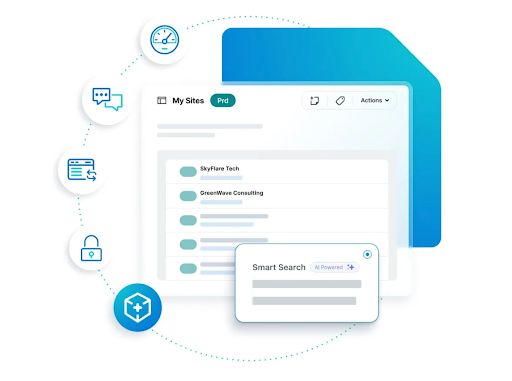
AI agents are changing the way users research and purchase products online. A managed hosting partner can provide a unified platform that includes essential tools and features you need to optimize for the agentic era. WP Engine’s eCommerce Performance Pack, includes improved search functionality through Smart Search AI+Recommendations.
WP Engine’s Smart Search AI product is a powerful, integrative, uncoupled add-on that optimizes the search experience. This product is compatible with any site built on WordPress, not just sites hosted on WP Engine, and provides an enhanced search experience and greater search flexibility, compared to a traditional in-site search.
Smart Search offloads user search queries from your server, allowing for high search volumes without an impact on your site’s performance. It’s also typo-tolerant, unlike WordPress’ inherent search functionality, and allows you to prioritize your best content in search results with custom weighting. The AI-Powered Recommendations feature can then serve up personalized content related to the products and pages your customers are already searching for.
The right product recommendation at the right time can increase a customer’s average order value (AOV) by up to 30%, further increasing your sales potential with very little effort on your end.
A/B testing and performance metrics
The best way to improve your UX is to go right to the source. Tracking your user behavior will help you see what parts of your site they’re responding to. A/B testing allows you to compare different versions of a page or site element to determine which performs better in terms of user engagement and conversions.
Tools like Optimizely and VMO can be used to conduct A/B tests on various aspects of your site, including headlines, call-to-action buttons, product page layouts, and checkout forms.
In addition to A/B testing, monitoring performance metrics will help you understand your site’s effectiveness. Google Core Web Vitals outlines essential metrics that evaluate your website’s loading performance, interactivity, and visual stability, so improving them can lead to better user experiences.
Tools like Google PageSpeed Insights can help you measure and improve your Core Web Vitals. Review these metrics regularly, especially before, during, and after high-traffic periods like Black Friday. This allows you to identify potential drop-off points in the user journey and make adjustments to improve your conversion rate year over year.
Leveraging managed eCommerce hosting
The hosting provider you choose can make or break your eCommerce sales, especially during BFCM.
By leveraging a managed host, eCommerce stores can take advantage of a highly optimized, secure, and scalable environment baseline and gain the peace of mind that comes from knowing their website is in expert hands.
Benefits of managed hosting
Managed hosting providers specialize in optimizing a specific type of site. WP Engine, for example, is a managed hosting company optimized for WordPress. We focus on improving the experiences of WordPress site owners and their end users by providing products and services that improve site optimization, AI & eCommerce capabilities, security, and support.
Managed hosts can handle many of the technical aspects of eCommerce website management, including software updates, backups, and performance monitoring. This lets store owners focus on their business and marketing strategies rather than the underlying infrastructure of their digital storefronts.
The primary benefit of managed hosting is improved site performance and reliability, resulting in faster load times and smoother user experiences. This is particularly crucial during high-traffic sales times like Black Friday, when slow-loading sites can lead to frustrated customers and lost sales.
Plus, managed hosts can provide more robust security features on a wider scale, like automatic malware scanning, firewall protection, and DDoS mitigation, to protect sensitive customer data during peak sales periods.
Boosting eCommerce performance with managed hosting
Managed hosting providers offer a range of tools and optimizations that can significantly boost store performance, including many of the optimizations already mentioned in this guide.
Advanced technical optimizations, such as server-side caching and object caching, CDNs, simple staging environments for making and testing changes, automated backups, and real-time monitoring and performance analytics can all be managed by the right hosting partner.
This deep insight into performance metrics like page speed, uptime, and server response time enables you to quickly identify and resolve any issues that may arise during high-traffic periods.
While some hosts offer simple, seamless migrations to their servers, complications can still arise when moving between hosts. It’s important to review the benefits of your current hosting plan well before Black Friday. If you do decide to migrate your site, you’ll want plenty of time to test your new environment before the biggest sales day of the year.
Optimize your WordPress site with WP Engine
Learn how WP Engine’s Managed Hosting for WordPress helps give your site the speed, security, and scalability it needs during the holiday rush.
Strengthening site security
A secure website reassures shoppers that their information is safe, preventing cart abandonment due to security concerns. Strengthening security is a great way to ready your site for shoppers ahead of high-traffic holiday events.
These strategies both protect your site data and help maintain customer trust, even in the face of potential security threats.
Implementing SSL
One of the foundational steps in strengthening your WordPress site’s security is implementing SSL (Secure Socket Layer) certificates. SSL encrypts any data being transmitted between the user’s browser and your server to ensure sensitive information, like credit card details, personal data, and login credentials, is protected.
When a website has an SSL certificate, its URL will start with “https://” instead of “http://” and include a padlock icon in the address bar. That simple icon can help put users at ease, letting them know it’s safe to make a purchase from your site.
Most managed hosting providers offer free SSL certificates with their hosting plans, making it easy to secure your site.
Additional advanced security measures
Beyond SSL, additional security measures such as two-factor authentication (2FA) for both customer and admin logins can significantly reduce the risk of unauthorized purchases or data breaches.
For WordPress sites, plugins like Wordfence and Sucuri can provide additional site security, including malware scanning, firewall protection, and brute-force attack prevention to safeguard your site against common vulnerabilities.
Knowing who or what is visiting your site is critical to security maintenance and performance. Malicious automated attacks are on the rise, and they become especially dangerous during the holidays when high volumes of customer and payment information are being exchanged.
Managing bot activity by blocking unwanted traffic protects your website and safeguards customer data. WP Engine’s Global Edge Security provides traffic information detailing whether users are human, automated, or unverified, as well as edge-level bot management, giving store owners peace of mind during the holiday season.
Because outdated software is a common entry point for hackers, WordPress users should ensure that WordPress core, PHP, and all plugins and themes are running on the latest versions. You should also regularly audit user permissions across your site to ensure no unnecessary privileges are granted.
Developing a recovery plan
Even with robust security measures in place, no system is entirely immune to all threats. That’s why developing a comprehensive disaster recovery plan is so important.
A disaster recovery plan outlines the steps your team will take in case of a security breach or data loss, so you can quickly restore your site and minimize downtime. A broad disaster recovery plan might include:
- Preparation and prevention: Regularly back up your site, use 2FA, keep your software up to date, and limit access to the WordPress admin dashboard and file systems to prevent bad actors from accessing your data.
- Detection and response: Set up real-time monitoring to help you identify security issues early. Designate a team responsible for handling security breaches (including internal staff, external experts, or both) and establish communication protocols across the team so you’re ready to take immediate action. Response actions may include temporarily disabling the website to prevent further damage, changing all admin credentials, and isolating the infected site environment to prevent the spread of malware.
- Assessment and containment: If there’s an active threat to your site security, conduct a thorough investigation to identify the extent of the affected files and compromised data. Use security tools or hire additional experts to remove any malicious code and apply necessary patches or updates to close the security gap.
- Recovery and restoration: Restore the site from the most recent clean backup and comb the restored site to verify integrity, ensuring it is free from malware, backdoors, or lingering security issues. Once safety is verified, bring the site back online and restore normal operations.
Regular backups are vital to any disaster recovery strategy because, in the event of a catastrophic event, you can easily restore your site to a previous, uncorrupted state. Many managed hosting providers offer automated daily backups as part of their service.
There are plenty of additional backup solutions available in the WordPress Plugin directory. UpdraftPlus is a popular option that allows you to schedule and store backups.
It’s also helpful to test your disaster plan to ensure it works and you can restore your site swiftly if needed. Think of it as a fire drill for your website: a bit of practice can help identify potential gaps in your plan and ensure that your team is prepared to handle a crisis.
For further peace of mind, WP Engine customers have the option to upgrade to high-availability plans or our failover architecture to keep sites operational in the event of a disaster. Learn more about both of these options and the key differences between high-availability and failover to see if either one makes sense for your eCommerce site.
Building an effective marketing strategy
By optimizing your on-page content, crafting targeted holiday marketing campaigns, and launching them early, you can enhance your eCommerce site’s visibility, which impacts how easily customers find you during Black Friday and Cyber Monday.
These strategies will help drive traffic, increase conversions, and ensure successful holiday sales.
Increase discoverability through SEO and GEO
SEO, or Search Engine Optimization, is the process of updating and designing your site for search engine discoverability. In the agentic web era, GEO, or Generative Engine Optimization, means optimizing your site to effectively serve human users, search engine algorithms, and modern AI tools.
To strengthen your website’s on-page SEO, start by conducting keyword research to identify high-intent search terms that customers are likely to use when searching for deals. Tools like Ahrefs, Yoast SEO plugin, and All in One SEO (AIOSEO) can help you discover relevant keywords and incorporate them into your site’s content. However, keywords aren’t the end-all, be-all of discoverability anymore.
And remember: Google’s algorithms prioritize user experience, so ensuring your site is fast, secure, and easy to navigate is the best way to significantly boost your search rankings during the holiday season.
As AI transforms how people discover and engage with companies and their content, traditional keyword-driven tactics are no longer enough to maintain visibility. Technical GEO strategies can help you improve discoverability on the modern web.
Creating holiday-specific content, like gift guides, holiday shopping tips, or product round-ups, can also provide value to your visitors and position your brand as a helpful resource, increasing the likelihood of attracting organic traffic. This content is especially important due to the rise of LLMs, which are rapidly changing how customers find products and information online. LLMs often prefer to cite information from content like structured comparisons or listicles.
Finally, make sure to optimize all content for mobile users, as a significant portion of holiday shopping now occurs on smartphones. Last year, 46.9 million customers shopped with their mobile devices for Cyber Monday. Optimizing for mobile content also helps your SEO rankings.
Holiday campaigns, promos, and design updates
Launching your holiday campaigns early can help build anticipation and capture early-bird shoppers, so start promoting your upcoming sales early and often. A pre-sale or teaser campaign can create buzz and encourage customers to sign up for notifications about additional upcoming deals.
Promotional content should be strategically placed to draw attention and drive customer action. Start by featuring your top deals and best-selling products prominently on your homepage. Use eye-catching call-to-action (CTA) buttons with compelling language like “Shop now,” “Limited-time offer,” or “Black Friday deal” to guide users toward your most lucrative promotions.
A dedicated “Black Friday/Cyber Monday deals” page or section that consolidates all your deals in one place can help simplify navigation, making it easier for shoppers to find and compare your best offers. That page should be well-optimized for SEO and GEO with relevant keywords and meta descriptions that attract organic traffic from search engines and answer the questions frequently asked by shoppers comparing options in LLMs
Your BFCM campaign strategy could also include creating dedicated landing pages and banners that promote special offers. WordPress page-building plugins like Elementor and Beaver Builder can help you design and customize festive page elements to engage users.
Leverage pop-ups and sliders to promote flash sales, exclusive discounts, or time-sensitive offers. OptinMonster and Popup Builder are two plugins that can help you create and manage these dynamic elements. To avoid overwhelming your visitors, make sure your pop-ups don’t feel intrusive by limiting how many times they are served to each user.
Subtle design touches, such as incorporating different icons or animations, can create a cohesive theme without overwhelming your end users or deviating from your brand standards. For example, adding a Black Friday countdown timer on your product page can create a sense of urgency, motivating customers to take advantage of your deals.
The data you glean from your site analytics can be used to tailor your messaging to different segments of your audience to target individuals based on their position in the sales funnel. For instance, you can offer exclusive deals to loyal customers or target users who abandoned their carts with special discounts that encourage them to complete their purchases.
Popular email platforms like Mailchimp and HubSpot can help you automate and personalize email campaigns based on past purchase behavior, browsing history, and customer preferences.
Plus, you can leverage social media platforms to reach a broader audience with targeted ads and engaging content. Social media plugins like Smash Balloon and Social Warfare can streamline content sharing and visibility between your social media accounts and your website.
Managing shipping and fulfillment
A late delivery can be the difference between a glowing review and a glowering customer.
By offering free shipping, adjusting pricing strategies, preparing for increased order volumes, and ensuring timely deliveries, eCommerce site owners can optimize their shipping and fulfillment processes to encourage repeat business long after the holiday season.
Offering free shipping
One of the most powerful incentives you can offer during Black Friday—when everyone is offering their lowest prices—is free shipping.
Studies consistently show that free shipping is a top motivator for online shoppers and can significantly reduce cart abandonment rates. More than 40% of shoppers abandon their carts because the extra costs are too high. Offering free shipping can significantly reduce cart abandonment rates and strengthen your eCommerce funnel.
For WooCommerce sites on WordPress, configuring free shipping options is fairly straightforward. Using extensions like WooCommerce Advanced Shipping Packages, you can create more complex shipping rules, like offering free shipping only on orders over a certain value or only on certain items.
Preparing for increased order volumes
As order volumes surge during BFCM, preparation is key to managing fulfillment. Start by forecasting your inventory needs based on past sales data and current market trends.
Plugins like Stock Manager for WooCommerce or ATUM Inventory Management can help you monitor stock levels in real time, update order statuses, send confirmation emails, and notify warehouse teams of new orders, reducing manual work and speeding up the fulfillment process. Reach out to your suppliers early to ensure they are prepared for the increased demand to avoid any delays in restocking.
Integrating your store with third-party fulfillment services like ShipStation or Easyship can provide seamless order management, shipping label generation, and real-time tracking updates.
Managing customer expectations and ensuring timely deliveries
Timely deliveries are crucial to maintaining customer satisfaction long after Black Friday transactions are finalized. Shoppers expect fast, reliable shipping, especially when purchasing gifts for the holiday season.
To ensure timely deliveries, consider partnering with multiple carriers to offer a range of shipping options, from standard to expedited shipping. WooCommerce Shipping integrates with popular carriers and allows you to display real-time shipping rates and estimated delivery times directly on your checkout page. Offering multiple shipping options gives customers flexibility based on their needs and helps manage their expectations regarding delivery times.
To that end, it’s important to communicate clearly with customers about shipping times, including potential delays. Set realistic expectations by displaying estimated delivery dates on product pages, on checkout screens, or in follow-up emails. Automated email updates can also keep customers informed of their order status, from confirmation to shipping to delivery.
In the event of unexpected delays, proactive communication can help reduce frustration. A well-managed shipping issue can even result in a positive overall customer experience.
To further enhance your shipping strategy, consider offering local pickup or same-day delivery options for nearby customers. Plugins like Advanced Local Pickup can help you manage and coordinate these alternative delivery methods, providing added convenience for local fans of your brand.
Prepare for Black Friday with WP Engine
As the holiday season approaches, ensure your eCommerce site is optimized for Black Friday and Cyber Monday sales. By following the strategies outlined in this guide, you can ensure a seamless, secure holiday shopping experience for your customers.
To further enhance your store’s performance, explore WP Engine’s managed hosting for eCommerce. With advanced features like edge-level caching, CDN integration, real-time performance monitoring, NitroPack, and Smart Search AI built in, our eCommerce Performance Pack is perfect for growing stores on WooCommerce, while Commerce Connect for BigCommerce can help take high-volume stores to the next level.
- WP Engine is a proud member and supporter of the community of WordPress® users. The WordPress® trademarks are the intellectual property of the WordPress Foundation, and the Woo® and WooCommerce® trademarks are the intellectual property of WooCommerce, Inc. Uses of the WordPress®, Woo®, and WooCommerce® names in this website are for identification purposes only and do not imply an endorsement by WordPress Foundation or WooCommerce, Inc. WP Engine is not endorsed or owned by, or affiliated with, the WordPress Foundation or WooCommerce, Inc. ↩︎